Oxethazaine is an antacid used to treat gastritis, peptic ulcer disease, heartburn, esophagitis, hiatus hernia, and anorexia. Oxetacaine, also called oxethazaince, is a potent surface analgesic with the molecular formula N, N-bis-(N-methyl-N-phenyl-t-butyl-acetamide)-beta-hydroxyethylamine that conserves its unionized form at low pH levels.
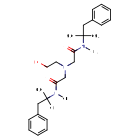
- Mechanism
- Curator reviewed · 4 references
Oxetacaine inhibits gastric acid secretion by suppressing gastrin secretion.
Moreover, oxetacaine exerts a local anesthetic effect on the gastric mucosa. This potent local anesthetic effect of oxetacaine may be explained by its unique chemical characteristics in which, as a weak base, it is relatively non-ionized in acidic solutions whereas its hydrochloride salt is soluble in organic solvents and it can penetrate cell membranes. Oxetacaine diminishes the conduction of sensory nerve impulses near the application site which in order reduces the permeability of the cell membrane to sodium ions. This activity is performed by the incorporation of the unionized form into the cell membrane.
- Primary indication
- Oxetacaine is available as an over-the-counter antacid and it is used to alleviate pain associated with gastritis, peptic ulcer disease, heartburn, esophagitis, hiatus hernia, and anorexia.Curator reviewed · 6 structured indications
- Formula / weight
- C28H41N3O3 · 467.654 g/mol (avg)
- First approval
- Canada, 2004
- Also known as
- Oxetacaine
- Code names
- WY-806
Resolves to
FTLDJPRFCGDUFH-UHFFFAOYSA-NSMILESCN(C(=O)CN(CCO)CC(=O)N(C)C(C)(C)CC1=CC=CC=C1)C(C)(C)CC1=CC=CC=C1What you can answer from here — as of October 29, 2025
Which drugs share a target with Oxethazaine, and which of those have an active Phase 3 trial?
Create a free account or log in to explore the full data card.
Create Account